Camping in North Carolina State Parks: Campsites, Cabins, Backcountry
Planning a state park stay gets easier once you know what kind of night you want: a drive-in campsite, a roof over your head, or a site reached on foot. North Carolina’s state parks offer different camping setups, but options and amenities vary by park. This overview helps you compare them, plan around your needs, and confirm the details before you go.
Start by choosing the kind of camping you want
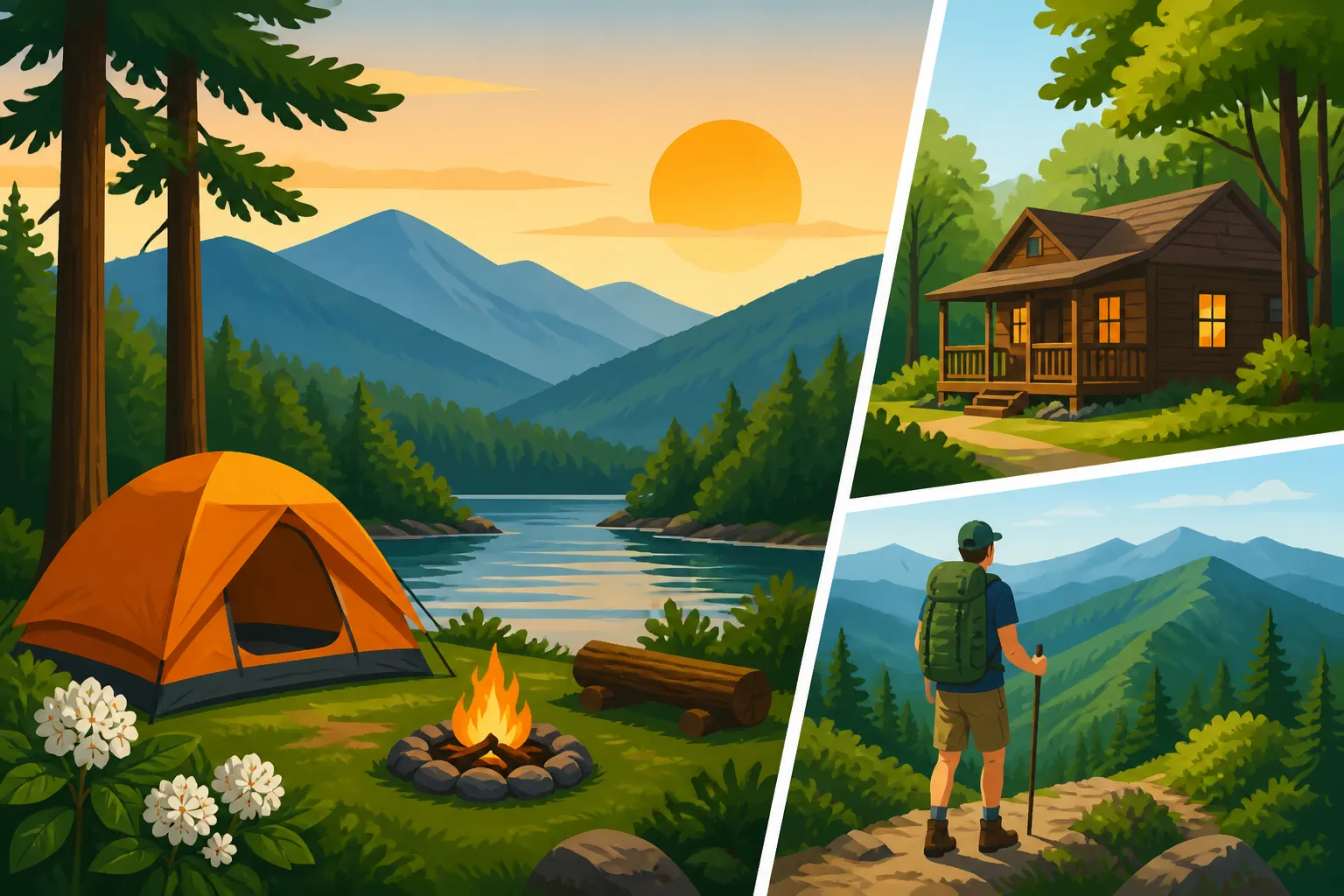
The biggest decision is often not which park to visit, but what sort of overnight experience you’re prepared for. A campsite near your vehicle, a cabin, and a backcountry site can all make a park trip possible, but they call for different gear, comfort levels, and planning.
A drive-in campsite is a natural starting point if you want to bring your own tent or recreational vehicle and keep most of your gear close to where you sleep. The details still vary: one site may suit tent camping, another may accommodate a trailer or RV, and not every site will have the same surface, utilities, or distance to shared facilities. Read the individual site listing rather than assuming the campground’s name tells you what you need to know.
A cabin can be a better fit if sleeping on the ground is a barrier, you want a more sheltered place to rest, or you’d rather pack less camping equipment. “Cabin” does not always mean a fully equipped vacation home. Some accommodations are rustic and require you to bring bedding, cooking supplies, or other essentials. Check the listing for what is provided, and compare Camper Cabins vs Vacation Cabins at North Carolina State Parks before choosing.
A backcountry stay involves a different trade-off. It can offer a quieter, more remote experience, but you may have to carry your gear and plan more carefully for water, food, weather, and finding the site. A backcountry reservation or registration process may also differ from booking a drive-in campsite, so look at the park’s current instructions before setting out.
Use this comparison as a starting point, not a substitute for checking the park’s details:
| Camping setup | Best suited to | What to confirm before you commit |
|---|---|---|
| Tent campsite | Campers bringing a tent and sleeping gear | Site surface, parking arrangement, water access, and nearby facilities |
| Trailer or RV site | Campers bringing a recreational vehicle | Vehicle fit, available hookups, pad details, and campground access |
| Camper cabin | Campers who want a roof but can bring some supplies | Beds, linens, heat or cooling, cooking equipment, bathrooms, and pet policy |
| Vacation cabin | Campers looking for a more home-like stay | Included amenities, sleeping arrangements, kitchen details, and booking conditions |
| Backcountry site | Campers willing to carry gear away from a drive-in area | Access route, registration steps, water plan, waste guidance, and site-specific rules |
| Group site | Clubs, families, or other parties camping together | Capacity, site layout, facilities, and rules for the entire group |
The right option depends on the trip you actually want to take. If your main goal is hiking, a simple overnight setup may make sense. If the trip is built around relaxing at camp, you may value a more comfortable site or cabin. If someone in your party has mobility, health, or sleep needs, consider those early rather than trying to solve them after booking.
You can narrow the park search by comparing its camping options, activities, and facilities. Matching Your Camping Style to the Right North Carolina State Park can help organize that choice. For a broader look at the variety of overnight setups, see The Main Types of Campsites in North Carolina State Parks.
What to know about tent, trailer, and RV campsites
A campsite is not a standard package. Even within one campground, individual sites can differ in their layout, surface, parking, shade, and services. Before choosing a site, work out what your camping equipment requires and check whether the specific listing matches it.
For tent camping, consider where the tent can be pitched, whether the sleeping area is level enough for your setup, and how far you will carry gear from your vehicle. A site’s photos or map may help you understand the layout, but they can’t always show current ground conditions or how much room there is around the tent area. If you need a particular surface or a very short distance between parking and the tent, look for details in the listing and ask the park if anything is unclear.
For a trailer or RV, confirm the fit before you reserve. A campground can accept recreational vehicles without every individual site being suitable for every vehicle. Think about the overall length and shape of your rig, the space needed to park and maneuver, and whether your setup requires hookups. If the site details do not clearly answer those questions, ask the park for guidance rather than relying on a general campground description. Will a Big Rig Fit? RV Length and Turn Questions for Park Staff covers the questions to raise when vehicle fit is uncertain.
The North Carolina Division of Parks and Recreation lists Cliffs of the Neuse State Park as offering Camper cabins, Tent sites, and Trailer and RV sites. The agency also lists Cliffs of the Neuse State Park as offering full-hookup RV camping. These options make the park a useful example of why it’s worth checking an individual park’s listings: a single park may have more than one way to stay, but you still need to choose the specific accommodation that matches your group and equipment.
Hookups deserve a close look. Check which utilities are available at the particular site, not just elsewhere in the campground. If you need power for a medical device, for example, verify the site’s power details and any practical limitations before booking. If you’re traveling in an RV, consider whether the available services match your rig and how you plan to use it. For a closer explanation of what the terms mean, see RV Hookups at North Carolina State Parks: Electric, Water, Sewer.
Also think about the parts of camp that can affect day-to-day comfort:
- Parking and unloading: Is the vehicle at the site, or will you carry gear from a separate parking area?
- Sleeping space: Can your tent, vehicle, or trailer accommodate everyone comfortably?
- Water and restrooms: What is available at the site or elsewhere in the campground?
- Cooking: What equipment can you use, and what does the park allow?
- Weather exposure: Does the site appear open, shaded, low-lying, or especially exposed?
- Noise and privacy: How close might you be to neighboring sites, roads, or shared facilities?
- Access: Are the route, surface, and facilities appropriate for everyone in your group?
Treat online details as a planning tool and confirm anything that could change your choice. Park pages and reservation listings may describe the general campground, while the individual site information can explain differences between neighboring spots. If an important detail is missing, contact the park using its official website to find current contact information.
Cabins can simplify the trip, but check what they include
Cabins can lower the barrier to a camping trip, especially for people who do not own a tent or prefer not to sleep outside. They can also make it easier to bring children, older relatives, or a mixed group with different comfort levels. But the word “cabin” alone does not tell you what the stay will feel like.
Start by identifying the type of cabin. A camper cabin may be a simple place to sleep, with some facilities shared or located outside the unit. A vacation cabin may offer a more self-contained stay, but the actual features still depend on the particular property. Don’t assume that either type includes a private bathroom, a complete kitchen, linens, or climate control. Read the accommodation description carefully and check the details that matter to your group.
A useful way to assess a cabin is to plan backward from the night itself:
- Where will each person sleep, and what bedding is supplied?
- Is there a bathroom inside the cabin, or will you use a shared facility?
- What cooking equipment is available, and what will you need to bring?
- Is drinking water available where you need it?
- Is the cabin suitable for the season and expected weather?
- Are there steps, narrow doorways, or other access features to consider?
- Are pets permitted in that specific cabin?
- What should you do at arrival and departure?
If the listing leaves one of these questions unanswered, don’t fill the gap with assumptions based on another park’s cabin. Amenities and policies can differ across the state park system and between accommodation types at the same park. Checking a Cabin’s Amenities Before Booking an NC State Park Stay offers a useful checklist for reading a listing.
Cabins can also change how much you need to pack, but they rarely eliminate packing decisions. You may still need towels, bedding, cooking supplies, food storage, personal items, or outdoor clothing. If linens are not clearly listed as provided, check before leaving home. If you’re traveling with a baby or a person who needs specific sleeping arrangements, confirm the room layout and sleeping surfaces in advance instead of relying on a general capacity description.
Think about how your group will use the space during the day, too. A cabin may be a comfortable place to sleep while the trip itself is mostly spent outdoors. That works well for some visitors, but a small indoor space may feel limiting if the weather turns or everyone expects to spend long stretches inside. Make a backup plan for rainy or cold conditions, and check which facilities at the park are open for your visit.
A cabin is not automatically the best choice for every first camping trip. Someone who wants to learn tent camping may prefer a campsite, while a camper who wants a low-effort overnight may find a cabin more practical. Compare comfort, cost structure, packing needs, and your group’s tolerance for shared facilities before deciding. For a wider look at cabin options, see Finding a Cabin in North Carolina’s State Park System. If you’re looking at camper cabins in particular, How Rustic Is a Night in an NC State Park Camper Cabin? can help set expectations.
Backcountry camping takes more preparation
Backcountry camping can be rewarding for people who want to spend the night away from a drive-in campground. It is also less forgiving of missing gear or unclear instructions. A site may require a hike or another form of non-vehicle access, and the distance from facilities can affect what you need to carry and how you manage the stay.
According to the North Carolina Division of Parks and Recreation, Elk Knob State Park offers backpack and zone camping. The wording points to two forms of camping that need their own planning. Don’t treat a zone-camping option as interchangeable with a numbered or individually designated campsite; read the park’s instructions to learn where camping is allowed and how to complete any required registration.
Before leaving for a backcountry stay, confirm the route to your intended area and how you are expected to register. Make sure you understand what information the park asks campers to provide, where to find the current instructions, and what to do if you arrive and the planned area is unavailable. A map can help with orientation, but it does not replace posted signs or current park directions.
Pack for the distance you will carry your gear. A setup that feels manageable beside a vehicle can become burdensome on a trail. Take only what you need, but do not cut essentials to the point that the trip becomes unsafe or uncomfortable. Consider:
- Water: Work out how you will have enough safe drinking water for the trip. Do not assume a backcountry site has a faucet or that a natural water source is safe to drink untreated.
- Food: Choose food that can be carried and stored safely. Follow the park’s current food-storage and wildlife guidance.
- Shelter and sleep: Bring gear suited to expected conditions, including a way to stay warm and dry.
- Lighting: Carry a dependable light source and a backup plan for low visibility.
- Navigation: Know how to follow the route and recognize the correct access point or camping area.
- Waste: Check the park’s instructions for human waste and trash before you go.
- Emergency readiness: Tell someone your plans, keep a way to get help, and be prepared to turn around if conditions change.
Backcountry areas may have specific restrictions on fires, stoves, camping locations, or equipment. Do not assume that a rule for one park applies to another, or that a rule for a drive-in campground carries over to a backcountry zone. Review the current park page and posted instructions before packing. The article Backpack Sites at NC State Parks, the Closest Thing to Dispersed can help distinguish designated backpack camping from the broader idea of camping wherever you find a suitable spot.
If this is your first overnight hike, keep the plan conservative. Choose a route and load that fit your experience, give yourself time to reach camp before dark, and avoid building the trip around a tight schedule. Weather, trail conditions, and your group’s pace can affect arrival. A shorter, simpler trip is often a better way to learn what you need than a long route with little room to adjust.
Accessibility needs deserve careful attention in the backcountry, as well as at drive-in sites. A route’s distance, slope, surface, and access to facilities may shape whether it works for a particular camper. If you’re planning for someone with a mobility limitation, ask the park about the route and site rather than assuming that a camping label tells the whole story.
Reservations, availability, and arrival planning
A good campsite choice is only useful if it is available for the dates you want and you understand how to arrive. Start with the official state park camping information and reservation system. Check the park’s current camping options, then compare individual site descriptions rather than searching only by park name.
A practical search process looks like this:
- Decide on your camping type and the equipment you’ll bring.
- Choose a park or a short list of parks that fits the trip.
- Search for dates and the kind of accommodation you need.
- Read the description of each available site, cabin, or group area.
- Confirm access, amenities, capacity, and any rules that affect your plans.
- Save the confirmation and arrival instructions where you can find them offline.
- Recheck the park’s current notices before traveling.
Availability can vary with the time of year, day of the week, and popularity of a destination. If your dates are flexible, compare nearby dates or consider a different park or accommodation type. A cabin may be unavailable while a campsite remains open, or the reverse. Keep a realistic backup rather than choosing an unsuitable option simply because it is the only one visible in a search.
Read the full booking conditions before finalizing a reservation. The reservation system and park page should explain the current cost structure, any service charges, cancellation terms, and stay conditions that apply to the booking. Named company prices and fee amounts can change, so check the official provider for current figures rather than relying on a saved screenshot, old message, or third-party summary. For help with the process, see Using ReserveAmerica to Reserve a North Carolina State Park Campsite and Campsite Cancellation and Refund Rules at North Carolina State Parks.
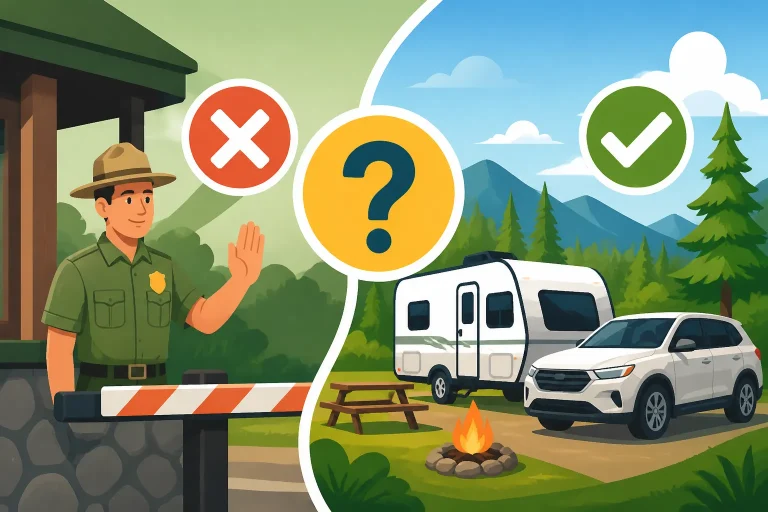
Arrival planning matters, especially if you’re driving a long way, arriving after work, or traveling with children. Confirm the directions to the campground entrance and the arrival steps for your specific reservation. Don’t assume that a park entrance, campground entrance, and campsite are all in the same place. Check for relevant access instructions and any posted notices before setting out.
If you’re arriving late, make sure you understand the park’s instructions before you leave home. A locked gate or a missed check-in step can change what’s possible on arrival. The park’s current page should be your reference for access details, and you can use Park Gates, Posted Hours and After-Dark Rules at NC State Parks to think through the questions that can affect a late arrival.
For a backcountry reservation or registration, be especially clear about where to park, where to register, and how to reach the site. Save maps and directions in a form you can access without a reliable phone signal. If weather or a closure changes your route, follow the park’s current instructions rather than trying an unverified alternate access point.
Before leaving, check the park’s current notices for closures or changes to camping access. Conditions can change after a reservation is made, so look again close to departure and follow updates during travel if possible. Finding Closure Notices for a North Carolina State Park explains why checking current information is part of trip planning, not just a step at the time of booking.
Costs, supplies, and rules to check before you go
The total cost of a stay depends on the type of accommodation, the park, and the details of the reservation. A campsite, cabin, or group area may have a different cost structure, and a booking can involve charges beyond the nightly accommodation amount. Check the current official listing and booking details before you compare options. What a North Carolina State Park Visit Costs: Entry, Camping, Extras can help you separate the kinds of costs to consider.
Compare the whole trip, not just the listed campsite amount. A basic site may require you to bring more equipment; a cabin may reduce gear needs but have a different booking cost. Travel distance, food, firewood, equipment rentals, and optional activities can affect the overall budget. If you need a specific accommodation, first check its availability and requirements, then compare costs among realistic choices.
Build a packing list around the accommodation, not around a generic camping checklist. Tent campers may need shelter, sleeping gear, lighting, and a way to cook. RV travelers should confirm their equipment matches the site’s services and layout. Cabin guests should verify what is provided and bring any missing essentials. Backcountry campers need to carry their own supplies along the access route and plan carefully for water and waste.
Some useful items apply across camping styles:
- Clothing suitable for the forecast and the activities you plan.
- A first-aid kit and any personal medication.
- Reusable water containers and a plan to get drinking water.
- Flashlights or headlamps with working batteries.
- Food and appropriate storage supplies.
- A map or directions saved for offline use.
- Bags for packing out trash where required.
- A backup plan for rain, heat, cold, or a change in conditions.
Rules are another part of the cost of planning: ignoring them can disrupt a trip or create safety problems. Read the park’s current information on pets, fires, quiet hours, vehicles, swimming, and access to buildings or facilities. Policies may differ by park or by area within a park. If you’re bringing a dog, check where pets can go and how they must be controlled; Pets at North Carolina State Parks: Leashes, Buildings and Swim Areas is a helpful starting point.
Fire rules need particular attention because restrictions can change with conditions. Never assume a campfire, grill, or stove is permitted just because the campsite has a fire ring or because a previous visit allowed one. Check the official fire-restriction information before leaving and again when you arrive. Follow any current park instructions, and have a no-flame meal plan in mind in case the rules do not allow your intended cooking method. North Carolina Burn Bans and Campfires: What Campers Need to Know explains what to check.
Food storage and wildlife guidance also deserve a close read. Use the instructions for the specific park and campground, especially if you are camping in a backcountry area. Don’t generalize from another park’s rules or assume that a storage method is acceptable everywhere. Secure food and trash as the park directs, and avoid leaving food scraps around your sleeping area. For broader preparation, see Bear-Safe Food and Trash Storage at North Carolina Campgrounds.
Finally, make a simple arrival and checkout plan. Know where to go, how to find your assigned site or cabin, what to do with waste, and which items need to be put away before departure. A little organization can make the first hour at camp less hectic and help you leave the area in good condition. Arriving at an NC State Park After a Long Drive: First-Hour Checklist and Leave No Trace Habits for NC State Park Campers offer practical help.
Match the park and campsite to your group
Once you know the kind of overnight stay you want, match the particular park and site to your group’s needs. A scenic location or a desirable activity may be only one part of a successful trip. Think about who is coming, what they can comfortably do, and what the group will need at camp.
For a family trip, consider how children will manage the route between the vehicle, campsite, restrooms, and planned activities. A campsite that is convenient for one group may involve too much walking or too little space for another. Plan for supervision and a realistic amount of downtime. If you’re taking young children, Day Trips to NC State Parks With Toddlers and Keeping Kids Entertained at a State Park Campground in North Carolina may help you plan the day as well as the overnight.
For a group of friends or relatives, settle basic logistics before booking. Work out how many people are coming, what equipment they are bringing, and whether one site can fit the group’s needs. Don’t assume that a group can add tents or vehicles to a family campsite without checking its stated limits. If the group has different comfort levels, a cabin or a combination of accommodations may be worth considering. When Your Group Is Too Big for a Single NC State Park Campsite can help you think through alternatives.
For a trip with older relatives or a person with a disability, assess the actual site and route rather than relying on a broad “accessible” label alone. Check the ground surface, distance to facilities, slope, parking arrangement, doorways, and bathroom setup where relevant. Accessibility information may not answer every practical question, so contact the park through its official website if you need clarification. Accessible Campsites at North Carolina State Parks, Park by Park and Confirming a Specific Campsite Meets Your Accessibility Needs offer focused planning help.
For an RV trip, make the vehicle and campground access part of the park choice. Check the site dimensions and available utilities, and consider the road and turning space needed to reach the campground. A site that meets your sleeping needs may still be unsuitable for your rig. If you are new to camping with an RV, RV-Ready Parks vs Hike-In Only: Telling NC State Parks Apart can help you sort through the broad differences.
For tent camping, prioritize the site’s layout and how much gear you can comfortably carry from parking. If you’re camping near the coast, wind and sand can make pitching and securing a tent more challenging; in the mountains, changing weather can affect what clothing and sleep gear you need. Check the park’s forecast and conditions close to the trip, and use Coastal Wind and Sand: Pitching a Tent at a Beach State Park or Wind on the Ridge: Pitching a Tent at a Mountain State Park for more specific preparation.
The easiest trip is usually the one with a plan that matches your group’s real needs, not the one with the most ambitious itinerary. Keep travel time, setup, meals, sleep, and the return trip in view. If you want a gentle introduction, a cabin or a convenient campsite may be more enjoyable than a remote overnight. If you’re experienced and well prepared, a backcountry option may better suit the kind of quiet and challenge you’re looking for.
Frequently Asked Questions
Do all North Carolina state parks have camping?
No. Camping options vary by park, and some parks may not have overnight accommodations. Check the specific park’s official camping page before planning to stay there.
Can I use one campground description to choose any site in it?
Not safely. Individual sites can differ in fit, surface, hookups, parking, and access. Read the listing for the specific site you’re considering and ask the park if an important detail is unclear.
Is a cabin a good choice for someone new to camping?
It can be. A cabin may reduce the amount of camping equipment you need, but amenities vary. Confirm sleeping arrangements, linens, cooking facilities, bathrooms, and other essentials before booking.
What should I check before a backcountry camping trip?
Read the park’s current guidance on access, registration, where camping is allowed, water, waste, food storage, and fire restrictions. Plan for carrying your gear and save directions you can use without a phone signal.
Where can I check current prices and rules?
Use the official state park information and reservation system for current prices, availability, booking conditions, and park rules. Check again shortly before departure for notices that could affect the trip.
Sources
- North Carolina Division of Parks and Recreation — State Parks (checked November 22, 2026)
- North Carolina Division of Parks and Recreation — Cliffs of the Neuse State Park: Home | NC State Parks (checked November 22, 2026)
Disclaimer
This article is for general informational purposes only and does not constitute professional advice. Laws, prices and regulations vary by location and change over time. Consult a qualified professional for guidance on your specific situation. North Carolina Camping & RV is not a government agency and is not affiliated with any government agency.