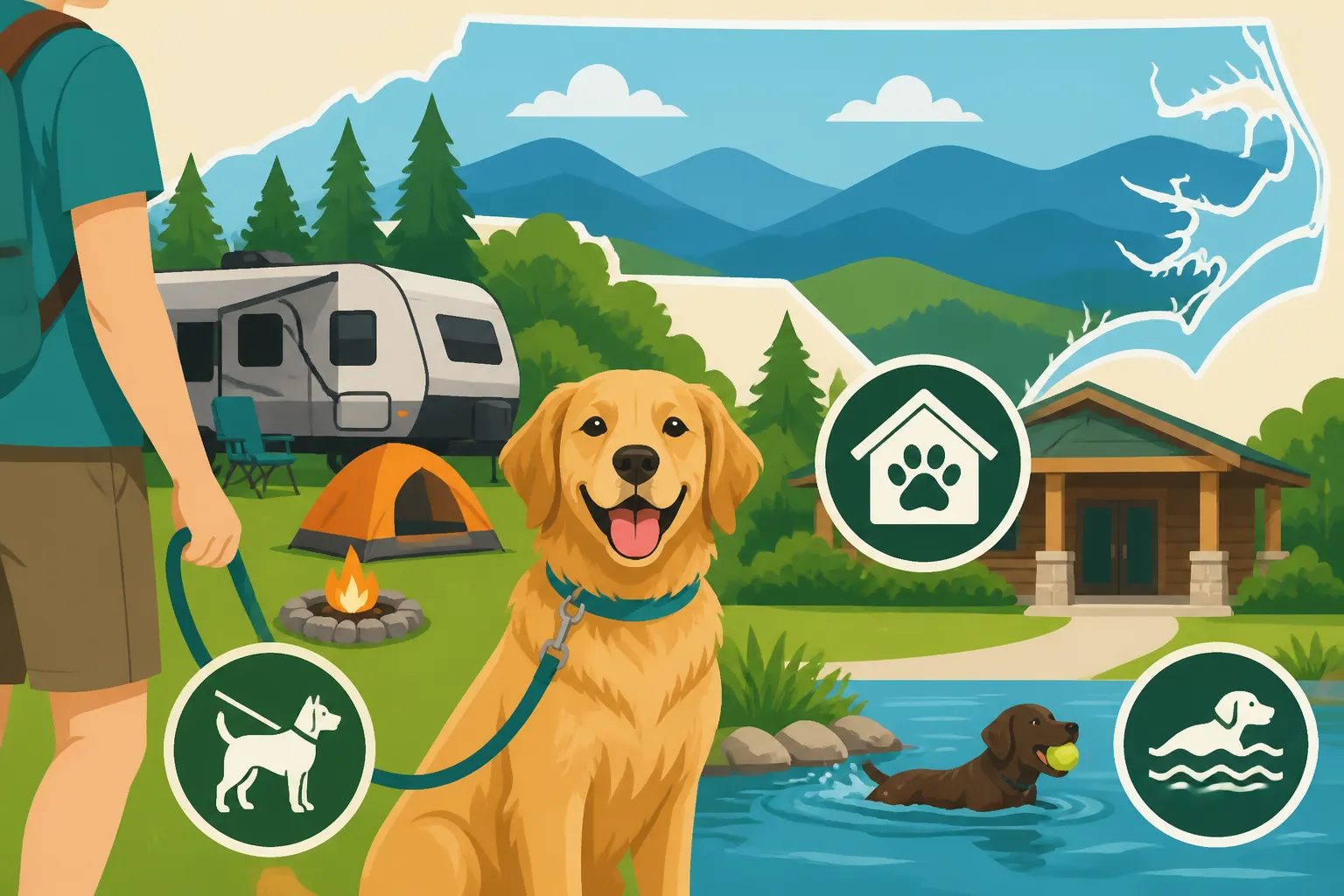
Pets at North Carolina State Parks: Leashes, Buildings and Swim Areas
Bringing a pet to a North Carolina state park can make a camping trip more enjoyable, but access isn’t the same everywhere. Campsites, cabins, park buildings and swim areas may have different rules, and leash requirements can vary by location. The safest plan is to check the specific park’s current pet policies before booking, then prepare for the places your pet may not be able to go.
Start With the Difference Between a Campsite and a Cabin
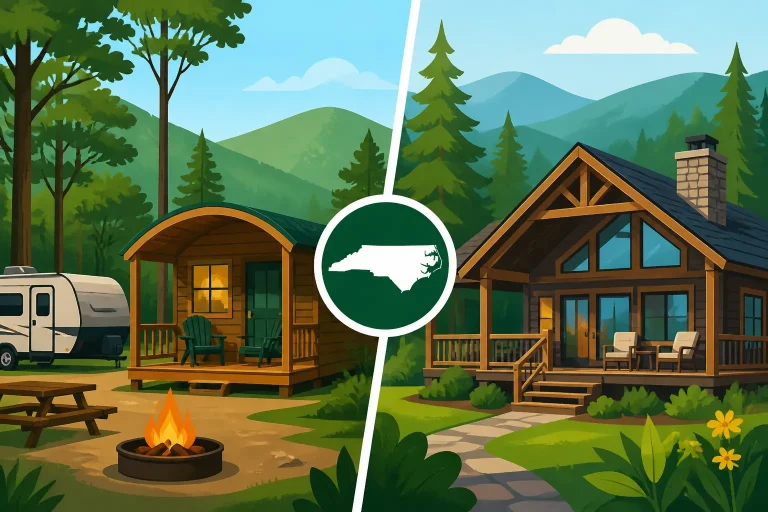
A pet-friendly campsite does not mean every overnight option at a park welcomes pets. According to the North Carolina Division of Parks and Recreation, pets are allowed at most campsites, except in cabins. That distinction matters when choosing a place to stay: a tent or RV site may suit a trip with a pet, while a cabin may not.
Treat each accommodation type as a separate question rather than assuming the park has one pet rule for all overnight stays. Check the details for the specific site or unit you are considering. The reservation listing and confirmation can help you identify the accommodation type, but if the pet policy is unclear, contact the park through its official website before finalizing plans.
Some cabins and campsites may be in the same campground, but that does not make their pet rules interchangeable. Similarly, a pet-friendly campsite does not automatically allow pets inside nearby facilities or at a swimming area. Think about your full itinerary, not just where you will sleep.
If a cabin is your preferred accommodation, do not rely on a general statement about pets at campsites. Confirm whether the specific cabin permits pets, and ask what options are available if it does not. For details on the differences between cabin types, see Camper Cabins vs Vacation Cabins at North Carolina State Parks. If you are comparing cabin amenities, Checking a Cabin’s Amenities Before Booking an NC State Park Stay can help you identify what to verify before you commit.
The distinction also affects the practical shape of your trip. If your pet cannot stay in the cabin, you will need a different plan; it is not enough to assume the animal can wait nearby or enter the cabin briefly. Make sure everyone in your group understands the arrangement before arrival. A pet’s comfort, supervision and safety should be part of the accommodation decision, not something to solve after checking in.
When looking at a campground, confirm the pet rule for the site type you want and read the campground’s current instructions. For a broader look at accommodation choices, Camping in North Carolina State Parks: Campsites, Cabins, Backcountry covers the main overnight options. If your decision is specifically between a tent and a cabin, Choosing Between a Camper Cabin and a Tent Site for a First Trip can help frame the trade-offs.
Plan for Quiet Hours Before You Arrive
A pet that can stay at a campsite still needs an overnight plan. The North Carolina Division of Parks and Recreation says pets must be confined to their owner’s tent or vehicle overnight during campground quiet hours. That rule is important to plan around, especially if your pet is used to sleeping outside, roaming around a yard, or staying beside you under an open shelter.
The practical takeaway is to decide before the trip where the pet will sleep and how you will manage nighttime needs. If a tent is the plan, consider whether your pet is comfortable settling inside it and whether everyone sharing the space can sleep safely. If you are traveling by vehicle, make sure the arrangement is suitable for the animal and does not create a safety concern. Do not assume that a leash tied outside, a portable pen, or an outdoor bed meets the requirement.
Quiet hours also affect how you handle brief nighttime tasks. Before settling in, organize food, water, waste bags, a leash and anything else you may need so you can keep the pet with you and avoid unnecessary trips around the campground. If the pet needs a late outing, follow the park’s directions and stay attentive to the surrounding campsite rules.
The North Carolina Division of Parks and Recreation also states that overnight pets in North Carolina state parks must be confined to their owner’s tent or vehicle during campground quiet hours. Keep that requirement in mind when choosing equipment and deciding whether the trip is a good fit for your pet. A dog that cannot settle in an enclosed sleeping space may find a campground night stressful, and a person who expects the dog to remain outdoors may need to reconsider the plan.
Do not interpret the confinement rule as permission to leave an animal unattended in a vehicle. The rule identifies where a pet must be confined during quiet hours; it does not remove the need to make a safe, humane plan. Think through weather, ventilation, access to water and the pet’s normal needs. If you are unsure whether a particular arrangement complies with the park’s instructions or is appropriate for your animal, ask the park before you go.
For a dog that is new to camping, a trial night at home in the intended sleeping setup can reveal problems before the trip. Bring familiar bedding and a secure leash, and avoid introducing too many new routines at once. A pet that rests well is easier to manage around neighbors, wildlife and campground activity. For more planning help, see Camping With a Dog at Carolina Beach State Park and Taking a Dog on a First Camping Trip at an NC State Park.
Check Leash Rules for the Park and the Place You’re Visiting
The title of a park’s general pet policy may mention leashes, but the actual leash requirements can depend on the location and activity. Do not assume that a rule you saw for one park applies across the state park system. Before leaving home, check the rules for the park you are visiting and confirm whether different areas, trails or facilities have their own directions.
A leash is useful even when the exact requirement has not yet been confirmed. It gives you more control around other visitors, dogs, bicycles, wildlife and moving vehicles. Keep the leash in hand rather than relying on a pet’s recall or allowing it to trail behind. A dog that behaves reliably at home may react differently to unfamiliar smells, crowded paths or sudden sounds.
A practical leash setup should be comfortable for the handler and secure for the pet. Check the clasp, collar or harness before the trip, and bring a backup if the equipment is worn. Keep enough control to guide the animal without allowing it to approach people or animals unexpectedly. These are sensible trip-planning practices, not a substitute for the park’s posted rules.
If a park specifies a leash length or other handling requirement, follow that requirement rather than relying on a general assumption. If the park page does not make the rule clear, ask the park through its official website before the visit. Avoid treating an online discussion or an old trip report as confirmation of current policy.
The difference between a trail and a developed facility can matter, too. A pet may be allowed in one area but not another, or a park may direct visitors to keep pets away from certain spaces. Check the policy for the specific place you intend to visit, and watch for signs once you arrive. If a posted notice is more specific than what you expected, follow the notice and adjust your route.
For park-specific examples and planning prompts, Leash Length and Control Rules for Dogs at NC State Parks is a useful related topic. If Hanging Rock is on your itinerary, Pets at Hanging Rock: Welcome in the Campground, Barred From Cabins addresses that park’s accommodation distinction, while Hanging Rock Family Campground: Hot Showers and Drinking Water can help you think about campground facilities. Check current park information before relying on any detail for a trip.
Treat Buildings and Swim Areas as Separate Destinations
A pet that can accompany you outdoors may not be allowed inside every building or at every swimming area. Because those rules are not established by the general campsite guidance, verify them for the particular facility you plan to use. This matters if your day includes a visitor building, indoor service area, swim beach, pool or other managed recreation space.
Build your day around the pet’s access rather than assuming the animal can follow you from one activity to the next. If you plan to visit a building, find out whether pets are permitted inside, whether they must remain outside, or whether there is another designated arrangement. Do not leave a pet tied unattended at an entrance unless park staff and posted directions say that arrangement is permitted and safe.
Swim areas need their own check. Ask whether pets may enter the area, remain on the beach, or use nearby paths and picnic spaces. Those are separate questions: a rule about one part of a recreation area does not automatically answer what is allowed elsewhere. If a pet cannot join the swimming portion of the day, arrange a responsible alternative rather than leaving the animal alone in an unsuitable place.
Do not assume that a pet may swim in a lake simply because the water is accessible from a campsite or trail. The designated swim area may have different rules from other shorelines, and local signs may set boundaries. Likewise, do not assume that a pet is barred from every waterfront location just because one beach has restrictions. Confirm the park’s directions for the specific shoreline and activity.
If the main purpose of the visit is swimming, make a clear plan before departure. Decide who will supervise the pet while others swim, whether the group can take turns, or whether the pet should stay at a different location with a responsible person. A vehicle should not be treated as a default waiting place, especially when conditions could become uncomfortable or unsafe.
For more trip-specific context, see Swim Beaches at NC State Parks: Passes, Pets and Planning and Swimming Safety at NC State Park Lakes and Beaches. The pet rules and visitor safety advice are related but not interchangeable: check both if your group plans a swim. For a particular destination, Swim Beach Visits at Cliffs of the Neuse: Fees and the No-Dog Rule addresses a specific park setting; verify its current details before making plans.
Make a Park-by-Park Check Before You Book
A quick, deliberate review can prevent the most common planning problem: arriving with a pet and discovering that a planned area or accommodation does not allow it. Use the official information for the specific state park and verify each part of your trip separately.
- Identify the park and the exact overnight option you want. Distinguish a campsite from a cabin rather than relying on the campground name alone.
- Check the pet policy for that accommodation. Confirm whether it applies to the particular site or unit you intend to reserve.
- Read the campground’s quiet-hour directions and plan where the pet will sleep.
- Check leash and animal-control requirements for the park and the areas you intend to visit.
- Look up rules for buildings, beaches, swim areas and other facilities on your itinerary.
- Review current notices and signs when you arrive, and follow any more specific directions that apply to the place you are using.
- If an important detail remains unclear, contact the park through its official website before the trip.
Keep a note of the information you confirm, including the page or park contact route you used. That makes it easier to revisit the details if your plans change or if you add another activity. A policy for a campground may not answer a question about a swim area, and a policy for one park may not answer a question about another.
If you are comparing parks, look beyond whether pets are generally permitted. Consider the amount of time your pet will spend confined, whether your planned activities include areas with separate restrictions, and whether you can comfortably supervise the animal. A park with a convenient campsite may not be the best fit if the main attraction on your itinerary is a facility the pet cannot enter.
For planning across different park types, Matching Your Camping Style to the Right North Carolina State Park can help you compare the trip itself, while Comparing North Carolina State Parks by Facilities and Activities can help you think through what visitors want to do. These comparisons are a starting point, not a replacement for checking the current pet policy at your destination.
Pack for Comfort, Control and Clean-Up
Even when a park permits pets in the places you plan to use, a comfortable trip depends on preparation. Bring the equipment your pet needs to remain secure, rested and manageable without relying on campground facilities being available for animals.
A useful pet kit can include:
- A well-fitted collar or harness and a secure leash
- Identification with current contact information
- Food, a bowl and enough drinking water for your plans
- Waste bags and a way to carry used bags until you find an appropriate disposal point
- Familiar bedding or a mat for the tent or vehicle
- Any regular medication and basic care items
- A light or reflective item that helps you keep track of your pet in low light
- A plan for weather, rest breaks and transportation
These are planning suggestions, not a list of required equipment. Adjust the kit to your pet’s size, health, temperament and the activities you have planned. If your pet has a medical condition, limited mobility or difficulty with heat or cold, discuss the trip’s demands with a qualified veterinary professional before traveling.
Practice the sleeping arrangement before departure, especially if the pet will be inside a tent or vehicle during quiet hours. A pet that has never slept in a tent may paw at the fabric, become unsettled by campground sounds or try to exit when someone moves. Familiar bedding and a calm routine may help, but they are not a guarantee. If your pet cannot settle safely in the planned setup, choose another accommodation or leave the animal at home with appropriate care.
Clean up promptly and keep waste contained until you can dispose of it as directed. Do not leave bags beside a trail, campsite or building. Keep food and pet supplies organized rather than allowing an animal to investigate neighboring campsites. A tidy setup helps avoid conflicts and makes it easier to pack out everything you brought.
Be considerate of people who may be uncomfortable around dogs, even if your pet is friendly. Give other visitors room, ask before allowing an interaction, and move aside when a narrow path or busy area makes passing difficult. Keep children in your group involved in these habits. A pet’s good behavior is not a reason to assume every person wants contact.
Decide Whether This Trip Suits Your Pet
A park visit can be a good experience for some pets and a poor fit for others. Consider the animal’s temperament, health and response to new settings before you book. Campgrounds can include unfamiliar people, other animals, vehicle movement, changing sounds and reduced privacy. Those conditions may be tiring or stressful, particularly for a pet that is anxious, reactive, elderly or not used to spending time outdoors.
Be realistic about the itinerary. A trip centered on swimming, indoor activities or time away from the campsite may leave the pet with fewer places to go. If your pet cannot accompany you to a planned activity, decide who will supervise it and where it can stay comfortably. If the arrangement depends on leaving the animal alone for an extended period, reconsider the plan.
Think about the pet’s routine as well. Regular feeding, water, medication, exercise and rest still matter while traveling. A long drive followed by a busy campground can be demanding. Allow time to arrive, set up calmly and let the pet adjust before heading to a crowded destination. If the animal is showing signs of distress, shorten the outing and move to a quieter place where that is allowed.
A backup plan is especially useful if the weather changes or the pet is uncomfortable. Identify a suitable alternative before leaving, such as changing the activity, taking turns with another adult or arranging care elsewhere. Do not wait until the group is already at a restricted building or swim area to decide what happens next.
When in doubt, choose the trip that puts the animal’s welfare first. That may mean selecting a campsite rather than a cabin, choosing a different park, changing the activity schedule or not bringing the pet. A successful visit is not measured by how many places the pet enters; it is measured by whether the people and animal can follow the park’s rules and remain comfortable.
For advice focused on pet camping logistics, Leaving Your Dog Alone at an NC State Park Campsite and Must Your Dog Stay in the Tent or Car During Quiet Hours? cover related planning questions. Check the current park instructions as well as your own pet’s needs before deciding what arrangement will work.
Frequently Asked Questions
Are pets allowed at North Carolina state park campsites?
The North Carolina Division of Parks and Recreation says pets are allowed at most campsites, with cabins treated as an exception. Confirm the rule for the specific accommodation before booking.
Can a pet sleep outside at a campsite during campground quiet hours?
No. Plan for the pet to be confined in the owner’s tent or vehicle during campground quiet hours, and make sure the arrangement is suitable for the animal.
Can a dog go inside park buildings or into a swim area?
Check the current directions for the specific building or recreation area. Do not assume a campsite pet rule answers questions about buildings, beaches or swimming locations.
Do leash requirements apply the same way at every park?
Do not assume they do. Check leash and control directions for the park and the specific areas on your itinerary, and follow posted instructions when you arrive.
Sources
- North Carolina Division of Parks and Recreation — Camping | NC State Parks (checked November 22, 2026)
- North Carolina Division of Parks and Recreation — NC State Parks Rules and Regulations | NC State Parks (checked November 22, 2026)
Disclaimer
This article is for general informational purposes only and does not constitute professional advice. Laws, prices and regulations vary by location and change over time. Consult a qualified professional for guidance on your specific situation. North Carolina Camping & RV is not a government agency and is not affiliated with any government agency.